![[interface] image of tablet with secure financial platform interface (for a fintech company)](https://cdn.prod.website-files.com/6964371dc0c3bfc2b499e416/69694b287be7d83c2ce26906_Desktop%20-%2014.png)
Concept and Product Pitch
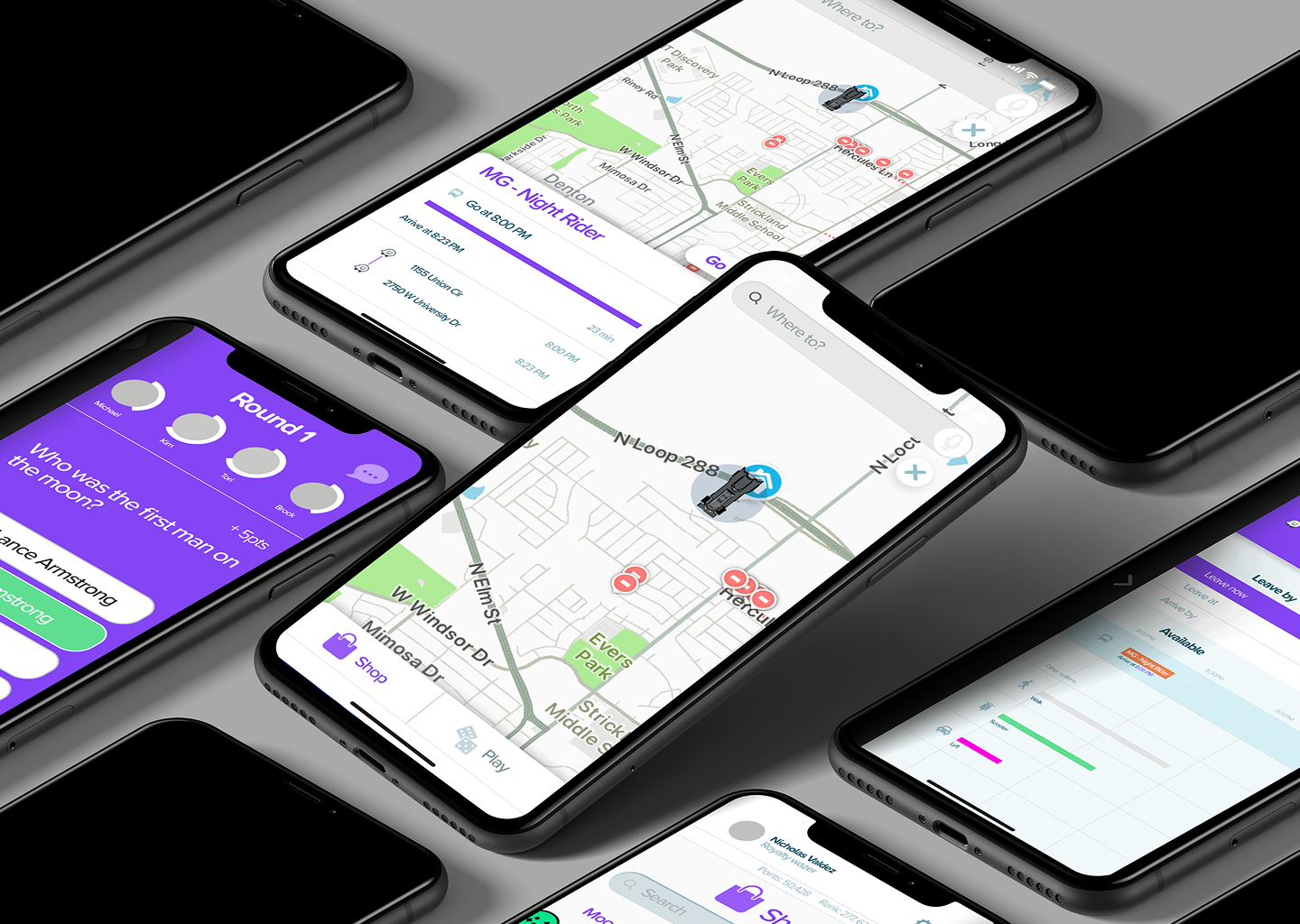
This project explored an agile design concept for introducing a new feature to the existing Waze passenger application within a short development timeline. Rather than serving as a research-heavy case study, the goal was to ideate, design, and pitch a product launch concept that could extend Waze’s current carpooling ecosystem.
The proposed feature expands the platform to include public transit integration, allowing users to plan multimodal routes and engage with live, interactive experiences while riding the bus. By incorporating real-time interaction and reward-based incentives, the feature encourages shared transportation behaviors while keeping users informed and engaged throughout their journey.
At its core, this concept aims to help users save money and time while also supporting broader environmental goals. By promoting public transit alongside carpooling, the feature positions Waze as a more sustainable mobility platform—one that encourages meaningful shared experiences and actively contributes to reducing traffic congestion and pollution.
The Problem Statement
Waze’s existing passenger experience is primarily centered around carpooling, limiting opportunities to encourage broader shared transportation and sustainable travel behaviors.
I proposed an agile transit feature that integrates public transportation into the Waze ecosystem, offering real-time interaction and rewards to incentivize shared transit use—helping users save time and money while reducing environmental impact.
The Solution
Why Did I Choose Waze
I chose Waze because it presented a strong opportunity to build on an already successful platform by introducing a feature that feels both relevant and innovative. By extending Waze’s existing focus on shared transportation, this project explores how a familiar experience could be enhanced in a fresh way—adding new value for users while staying aligned with the app’s core purpose.
Business Opportunities
Waze presents a strong business opportunity to expand beyond carpooling by integrating public transit into its passenger experience. By introducing a transit feature with real-time interaction and reward systems, Waze could increase daily user engagement, open new partnerships with local transit agencies, and create additional revenue streams through sponsored incentives and data insights. This approach positions Waze not only as a navigation tool, but as a broader mobility platform that supports sustainable transportation while driving long-term user retention and brand value.
Product Pitch
The content below outlines the conceptual approach and product vision behind the Waze Transit feature. Rather than a finalized solution, this pitch focuses on how the idea could be introduced, positioned, and communicated as a potential product launch—highlighting opportunity, value, and user experience direction.
The pitch also includes animated GIFs that demonstrate key user flows and interactions, helping visualize how users would move through the experience in real time. These animations are intended to support the narrative by showing motion, feedback, and interaction patterns that reinforce the proposed concept.
![[interface] image of a computer showcasing educational software (for a edtech)](https://cdn.prod.website-files.com/6964371dc0c3bfc2b499e416/696508e19134504e0f498a01_Untitled%20design%20(17).png)
![[background image]](https://cdn.prod.website-files.com/6964371dc0c3bfc2b499e416/696474d74a68566c1fec7946_ODIS_Cover.svg)